Therapy and counselling for ADHD and neurodivergent adults in New Zealand
ADHD and neurodiversity informed therapy in Aotearoa New Zealand - available now
At Beehyve, we offer specialist counselling and therapy services for ADHD, autism, trauma, and other neurodivergent experiences. Our team of qualified Kiwi counsellors, psychologists, and therapists bring lived experience, clinical expertise, and deep empathy to every session.
Whether you're navigating stress, relationships, identity, or mental health challenges, our practitioners are here to support you with evidence-based approaches and inclusive care.
We currently have therapists available and ready to work with you.
Contact us to schedule a discovery call with a member of our team.



Which is right for you?
Therapy or Coaching
It's imporant to work with qualified practitioners with training and ideally lived experience.Therapy → understanding, healing and change.
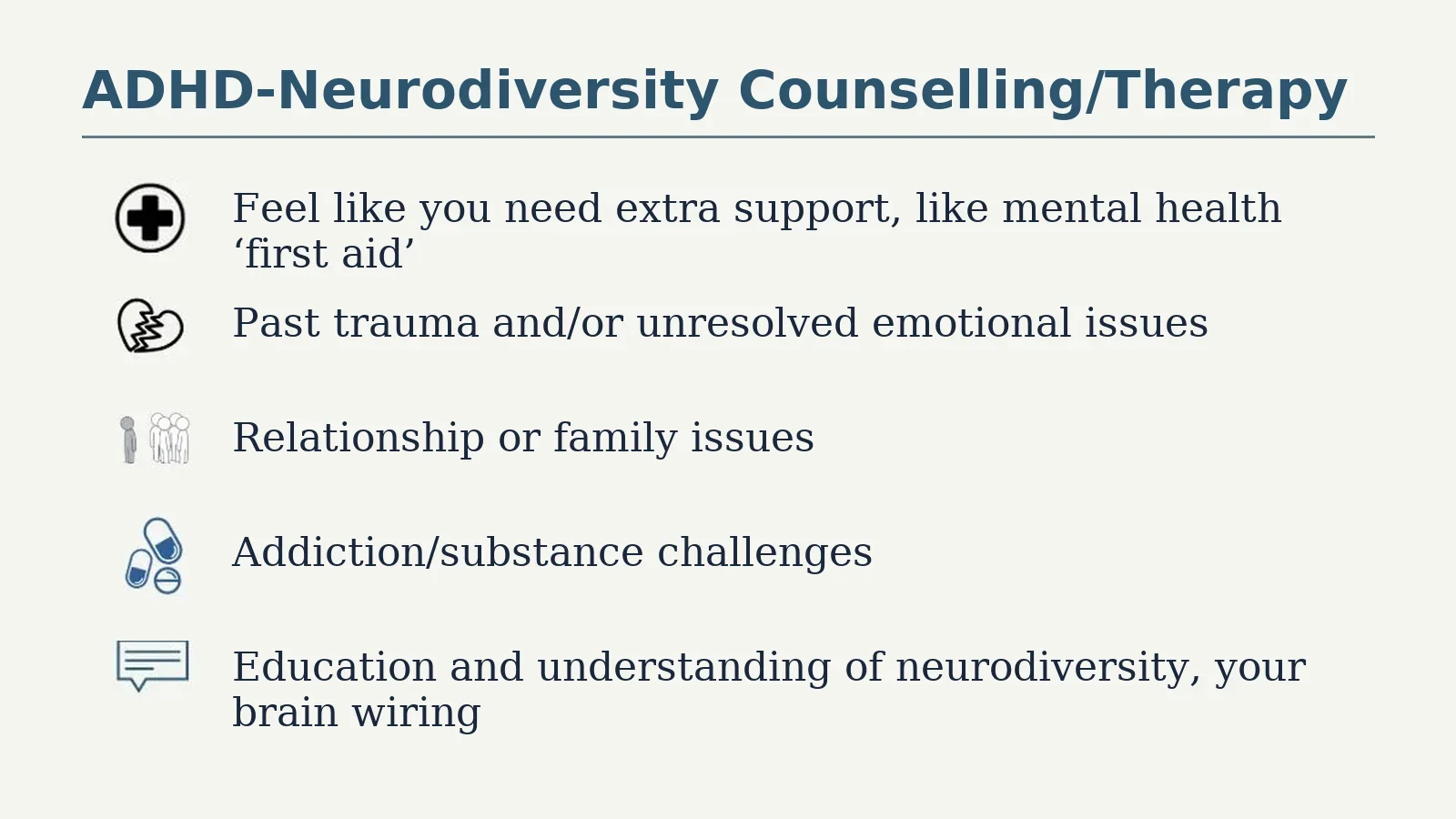
Coaching → growth and achieving goals
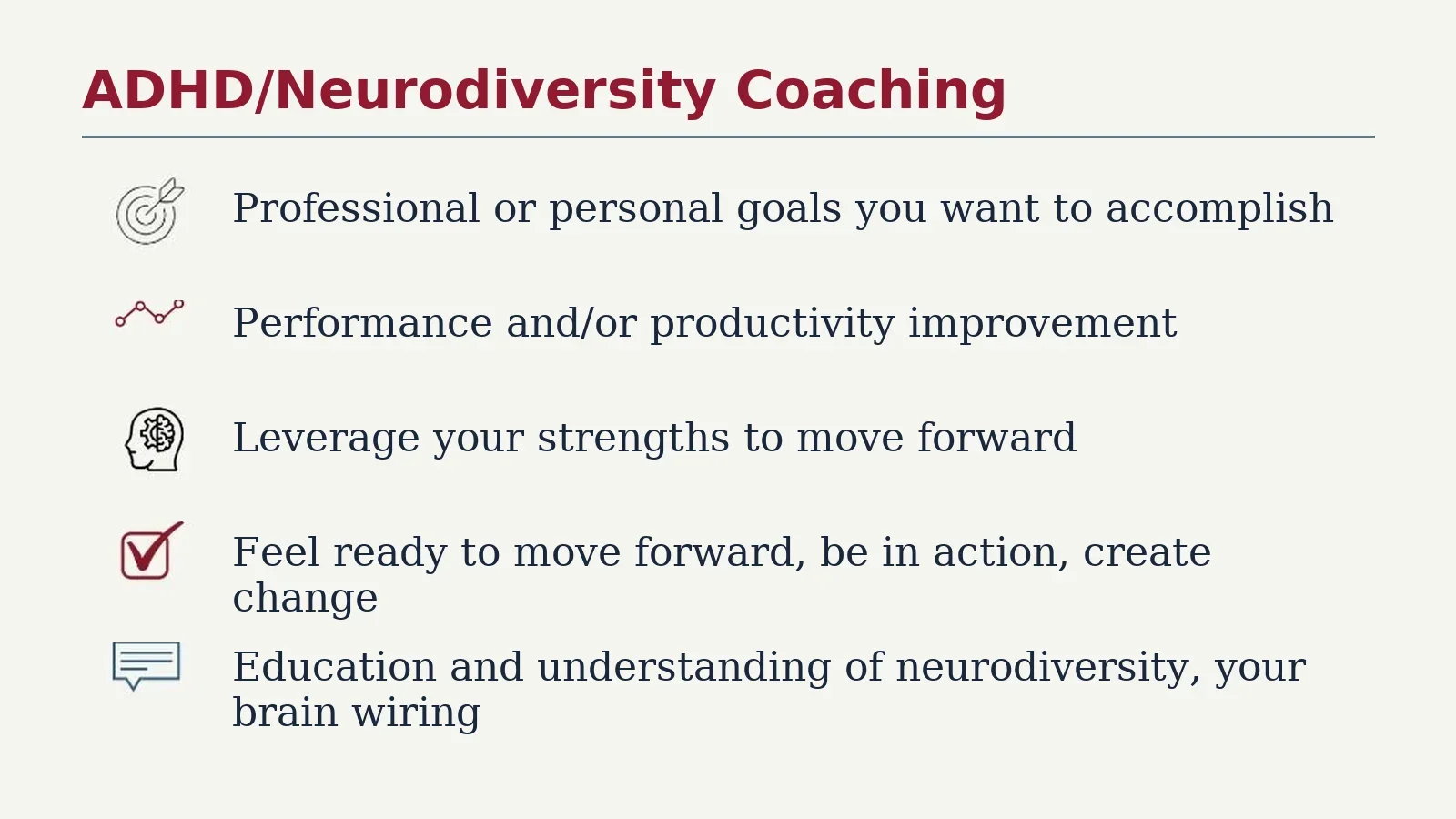
It’s helpful to understand what outcome you want to achieve.
But it’s okay if you don’t know yet - contact us and we’ll help you figure it out.
Who we support
At Beehyve we offer specialist coaching for ADHD, autism and other neurodivergent traits whether your diagnosed or simply exploring.
Beehyve’s therapy team works with individuals, couples, and families across New Zealand. We support:
Adults living with ADHD, autism, other neurodivergent traits, CPTSD, anxiety, depression and more
People exploring late diagnosis or neurodivergent identity
Parents and caregivers of neurodivergent children
Young adults navigating transitions, tertiary study, and independence
LGBTQIA+ clients seeking affirming, trauma-informed care
Anyone seeking support for grief, addiction recovery, relationship changes, or emotional wellbeing
Services we Provide
-
Beehyve Health offers specialised therapy for individuals seeking support with how they feel about themselves and their future. You may be looking for better ways to deal with current stressors, or you may want to learn how to stop past experiences from limiting the way you look at what’s ahead.
We work with you to explore what’s going on beneath the surface—emotionally, mentally, and relationally—and support you in making sense of it.
Therapy is not about giving advice or offering opinions. We're here to empower you. We'll help you develop a personalised set of resources and strategies so you can make positive change and flourish.
Our approach is grounded in best-practice therapeutic models recognised across Aotearoa New Zealand. Our practitioners are fully qualified, registered, and experienced in a range of methodologies including:
Eclectic Therapy (Meaning our team combines different approaches to work best with how you work)
Dialectical Behaviour Therapy (DBT)
Acceptance and Commitment Therapy (ACT)
Trauma Focused Therapy including EMDR
Psychotherapy
Solution Focued Brief Therapy (SFBT)
…and more
Individual Therapy Fees:
Counsellor | Social Worker | Psychotherapist: $130-$230 per session
Psychologist: $300 - $350
Therapy Student / Practicum: $55
NOTE: Fees published are for 2026 only and may be subject to change.
-
Relationship therapy aims to help you find fulfilment in personal relationships. Like other forms of therapy, relationship therapy supports people to find more satisfaction in life.
The focus of our therapy is to build your skills and insights around self-awareness, attitude and communication. This can include learning how to manage conflict better, avoid misunderstandings and build acceptance.
Our counsellors are also experienced in supporting people through relationship starting, transition, and dissolution. They'll help you explore and apply new attitudes and skills so you can learn and grow, all while knowing you have someone in your corner.
Relationship Therapy helps with:setting healthy boundaries
building confidence and intimacy
managing conflict
improving communication and acceptance.
Relationship Therapy Fees:
Counsellor: $210 - 250 per session
Psychologist: $300 - $350
NOTE: Fees published are for 2026 only and may be subject to change.
-
Workplace Therapy
Beehyve Health provides confidential, professional therapy services to support employee wellbeing in the workplace. Whether your team is navigating stress, burnout, grief, relationship challenges, or workplace transitions, our counsellors offer a safe and supportive space to talk through what’s going on—with someone impartial and trained to help.Workplace therapy helps with:
Mental Health Support: Help with anxiety, depression, stress, and emotional wellbeing.
Workplace Wellbeing: Support for managing conflict, change, career transitions, and work-related pressures.
Flexible Access: Sessions available online or in-person to suit your team’s needs.
Confidentiality Guaranteed: All therapy is private and secure.
Simple Employer Billing: Services are funded by the employer via purchase order. Pricing is consistent with our standard therapy rates, plus GST.
How It Works:
Employers can arrange therapy for their staff by issuing a purchase order. We’ll take care of the rest—ensuring your team receives timely, professional support without the administrative hassle.
NOTE: Fees published are for 2026 only and may be subject to change.
Ready to get started? Enquire today to find your Beehyve practitioner.

OUR APPROACHESWe bring effective, evidence-based
therapeutic approaches
Every therapist works a little differently. Our team draws on a range of therapeutic approaches and brings deep knowledge of ADHD, autism and other neurological differences through years of practice and, for many, lived experience.
Our therapeutic approaches include:
-
DBT is a practical, evidence-informed therapy that helps people better understand their emotions, thoughts and reactions, while developing skills to navigate life's challenges with greater confidence and self-awareness.
For many ADHD and neurodivergent people, DBT can be particularly helpful for managing overwhelm, emotional intensity, rejection sensitivity, impulsive responses, relationships and stress. Rather than trying to change who you are, DBT focuses on building awareness, self-acceptance and practical skills that support daily life.
By learning to notice what is happening internally and pause before reacting, you can move from acting automatically to making more intentional choices that align with your needs, goals and values.
-
ACT is a therapy that helps you build a rich and meaningful life alongside life's challenges, rather than waiting for difficult thoughts, emotions or circumstances to disappear first.
Instead of getting caught in struggles with anxiety, self-doubt, overwhelm or perfectionism, ACT helps you create space for these experiences while focusing your energy on what matters most to you. Through exploring your values and what gives life meaning, ACT supports you to take small, purposeful steps towards the person you want to be and the life you want to live.
-
CBT is a structured and practical therapy that explores the connection between thoughts, emotions and behaviours. It is based on the idea that the way we interpret situations can influence how we feel and respond.
Together, you and your therapist identify patterns that may no longer be serving you and experiment with new ways of thinking, responding and approaching challenges. CBT is often goal-oriented and focuses on building skills that can be applied in everyday life.
Many ADHD and neurodivergent people find CBT helpful for understanding patterns such as self-criticism, avoidance, perfectionism, anxiety and overwhelm. The focus is not on changing who you are, but on finding strategies that support the life you want to live.
ACT and DBT are later, specifically developed types of CBT -
Narrative Therapy is based on the idea that people are more than the difficulties they face. Rather than viewing a problem as part of who you are, Narrative Therapy helps you separate yourself from the problem and explore the many stories, experiences, strengths and values that make up your life.
Together, you can examine the stories that have shaped how you see yourself, identify those that are no longer serving you, and strengthen alternative stories that reflect your abilities, hopes and lived experience. For many ADHD and neurodivergent people, this can create space to move beyond labels, self-criticism and assumptions, and develop a more helpful and compassionate understanding of themselves.
-
Person-centred therapy uses a non-authoritative approach that allows you to take more of a lead in discussions so you discover your own solutions. The therapist acts as a compassionate facilitator, listening without judgment. They'll acknowledge your experience without moving the conversation in another direction. You’ll have someone there to encourage and support you through the therapeutic process without interrupting or interfering with your process of self-discovery.
-
Psychotherapy is an in-depth form of therapy that explores the experiences, relationships, emotions and patterns that shape how you see yourself and move through the world. Rather than focusing only on immediate challenges, psychotherapy creates space to understand the deeper influences behind the ways you think, feel and respond.
Through a collaborative therapeutic relationship, psychotherapy can help you make sense of past experiences, increase self-understanding, and develop new ways of relating to yourself and others. For many ADHD and neurodivergent people, this process can support identity development, self-acceptance, healing from shame and misunderstanding, and building a life that feels more authentic and aligned with who they are.
-
Relationships can be deeply rewarding, but when one or both partners are ADHD or neurodivergent, differences in communication, attention, emotional responses, energy levels, sensory needs and ways of organising daily life can sometimes create confusion or conflict.
Relationship Therapy provides a space to better understand each other's experiences, strengthen communication, and develop practical ways of working together. Rather than focusing on blame, therapy helps couples recognise patterns that may have developed over time and explore new ways of responding to one another with greater understanding and connection.
For many neurodivergent couples, therapy can support navigating challenges such as misunderstandings, emotional intensity, household responsibilities, intimacy, parenting, and the impact of late diagnosis. The goal is not to make either partner fit a particular mould, but to build a relationship that works for the unique people within it.
-
EMDR is a therapy designed to help the brain process and make sense of difficult or overwhelming experiences that may continue to affect you in the present. It is often used for trauma, but can also support people experiencing anxiety, distressing memories, negative self-beliefs and patterns that feel difficult to shift.
During EMDR, your therapist guides you through a structured process that helps your brain revisit experiences in a safe and supported way, allowing them to become less emotionally charged over time. Many people find that experiences which once felt overwhelming begin to feel more settled, creating space for new perspectives, greater confidence and increased emotional wellbeing.
It has a bit of a strange name, but it can have amazing outcomes and is supported by a lot of research.
-
We take a three staged approach to trauma-informed therapy.
Post-traumatic stress disorder (PTSD) and complex trauma (C-PTSD) may come about from a single traumatic experience multiple or prolonged exposures.
You may experience trauma through neglect, bullying or medical issues; abuse of a sexual, physical, emotional or vicarious nature; a disaster that is natural, man-made or technological; war or terrorism.
A three-staged approach to trauma therapy brings together a variety of therapeutic approaches.
Stage 1 focuses on engaging and resourcing you with skills to provide safety and stability.
Stage 2 focuses on applying previously learned coping skills whilst working through the traumatic memories.
Finally, Stage 3 consolidates what you've learned so you have strategies to enhance your personal and relational wellbeing.
-
Many ADHD, Autistic and neurodivergent people spend a lifetime being told to focus on changing their thoughts or behaviours, while feeling disconnected from what is happening in their bodies. Somatic Therapy takes a different approach by recognising that stress, sensory experiences, emotions and past experiences are often carried in the nervous system as well as the mind.
Therapy may involve paying attention to body sensations, movement, breathing, tension, energy levels and feelings of safety, helping you better understand how your nervous system responds to the world around you. Rather than trying to force change, Somatic Therapy supports greater awareness, self-understanding and regulation, helping you find ways of being that feel more sustainable, authentic and supportive of your wellbeing.
-
CBT is a structured and practical therapy that explores the connection between thoughts, emotions and behaviours. It is based on the idea that the way we interpret situations can influence how we feel and respond.
Together, you and your therapist identify patterns that may no longer be serving you and experiment with new ways of thinking, responding and approaching challenges. CBT is often goal-oriented and focuses on building skills that can be applied in everyday life.
Many ADHD and neurodivergent people find CBT helpful for understanding patterns such as self-criticism, avoidance, perfectionism, anxiety and overwhelm. The focus is not on changing who you are, but on finding strategies that support the life you want to live.
ACT and DBT are later, specifically developed types of CBT
We also offer grief support, relationship transition support, and therapy for life transitions such as menopause, separation, and identity development.
How Therapy works at Beehyve
We’re more than a therapy service—we’re a neurodivergent-affirming community. Whether you're seeking clarity, healing, or growth, our team is here to walk alongside you.
Book a Discovery Call
Meet one of Beehyve’s therapists, ask questions, and see if you’re the right fit for each other.Where we meet
It’s all online via secure video so you can visit us from anywhere in NZ
Agree on initial sessions
Flexible options: weekly, fortnightly or discuss a frequency that suits your budget - we get itStart your journey
Sessions are supportive, confidential, and tailored to your preferred outcomes.Access your info
Work how you want. We can give you access to your own booking links, notes and information through our online portal

How much does it cost?
INDIVIDUAL THERAPY FEES
Counsellor | Social Worker | Psychotherapist: $130-$230 per session
Psychologist: $300 - $350
Therapy Student / Practicum: $55
RELATIONSHIP THERAPY FEES
Counsellor: $210 - 250 per session
Psychologist: $300 - $350
Not sure yet? Click the button to ask us a question.
Fees are per hr session, & based on training, experience and type of service.
Fees do not include Workplace Services.
Fees published are for 2026 only and may be subject to change.

Meet Our Counsellors and Therapists
Each Beehyve therapist brings a unique blend of professional training and lived experience. Many are neurodivergent themselves, offering deep understanding and compassionate care.











Not sure where to start?
Finding the right practitioner can feel overwhelming. We’re here to help make the decision process easier.