Stuck on an ADHD assessment waitlist? Newly diagnosed and not sure where to from here? You don't need a diagnosis to start getting support.
By Erica, Beehyve Health
In February, the rules changed so that specially trained GPs and nurse practitioners can assess, diagnose and prescribe medication for ADHD in adults. In time, as more GPs train up in this specialist area, this change should make ADHD assessments and medication quicker and easier to access. For now, demand is high and waitlists remain long.
But diagnosis and medication are only one piece of the puzzle when it comes to support for ADHD. We've found that for most neurodivergent people, a combination of medication and psychoeducation, colloquially known as 'pills and skills', works best.
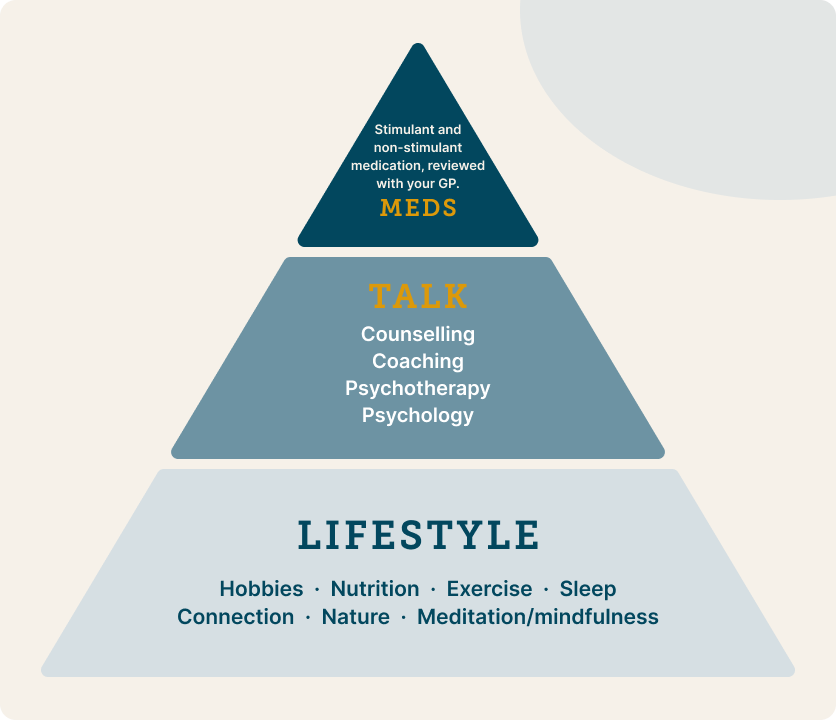
The 'pills and skills' pyramid, from Dr Torrance Merkle. Every layer can play a part, and what helps looks different for everyone.
'Psychoeducation' refers to learning about how ADHD affects our brain function, how it impacts different areas of our lives, and what skills we can develop to help manage this. At Beehyve, our GPs offer a combination of medication and psychoeducation to support newly diagnosed people. We also have a team of ADHD coaches, counsellors and therapists who provide specialist support in this area.
"The best thing? You don't need a diagnosis to book ADHD coaching or counselling."
Whether you're on a waitlist, newly diagnosed or just starting to wonder, it's one of the most accessible ways to get support.
What is ADHD coaching?
ADHD coaching is a great option for people who are ready and motivated to make some changes, but who may need support figuring out the 'what' and the 'how'. It's present and future focused, and targets the everyday executive function challenges someone with ADHD might experience: planning, prioritising, time management, getting started on tasks and finishing them, organisation, routines, and navigating work environments.
You and your coach work together to identify the areas you're struggling with, where your strengths lie, what you'd like to change, and which skills and strategies might work best for your brain. Then you'll create a structured plan, start building skills, test them out, and adjust as you go.
What is ADHD counselling and therapy?
ADHD counselling and therapy addresses the psychological and emotional side of ADHD. It offers support and understanding for experiences common to many of us: emotional dysregulation, rejection sensitivity, shame, low self-esteem, or years of feeling misunderstood.
For example, this pathway can be helpful if you need a safe space to process the grief and anger that can come with a late diagnosis, if you'd like to reframe unhelpful narratives you may have built up about yourself (like 'I'm lazy' or 'I'm broken'), or if you just feel stuck in the same patterns and aren't sure why.
Beehyve's counsellors and therapists are also trained to explore ADHD alongside conditions that often co-occur, like anxiety, depression, substance use or trauma. Working with someone skilled in supporting people with ADHD gives you space to work on emotional regulation and resilience, self-care and wellbeing, and relationships, by exploring how ADHD may be affecting the way you communicate, manage conflict, or experience intimacy.
Coaching or counselling? At a glance
ADHD coaching
Focus
Practical, day-to-day life
Looks at
The present and the future
Might suit you if
You're ready to make changes and want help with the 'what' and 'how'
ADHD counselling
Focus
The emotional and psychological side
Looks at
Your experiences, past and present, and how you see yourself
Might suit you if
You'd like a safe space to process, reframe and be understood
Ongoing support from people who get it
Neither pathway is a one-off fix. Coaching builds skills over time, testing what works and adjusting as life changes. Counselling gives you room to work through things at your own pace, and it's okay to start with one and move to the other. Our coaches, counsellors and therapists draw on their own life experience to understand where you're coming from, and they're there to help you figure things out for yourself. Whichever pathway you choose, you'll be supported by someone who really gets that this is a bit of a journey.
Diagnosed or not, you can start here
If you're looking for support and you're not sure where to begin, get in touch. We can talk through whether coaching or counselling might suit you.
Get in touchFurther resources
Beehyve's founder Anna has put together a helpful guide to the different therapeutic modalities and support pathways available, and what they all mean.
Need to talk to someone now? Free call or text 1737, any time.